
UV Disinfection
Chemical-Free Pathogen Elimination Through Ultraviolet Light
What is UV Disinfection?
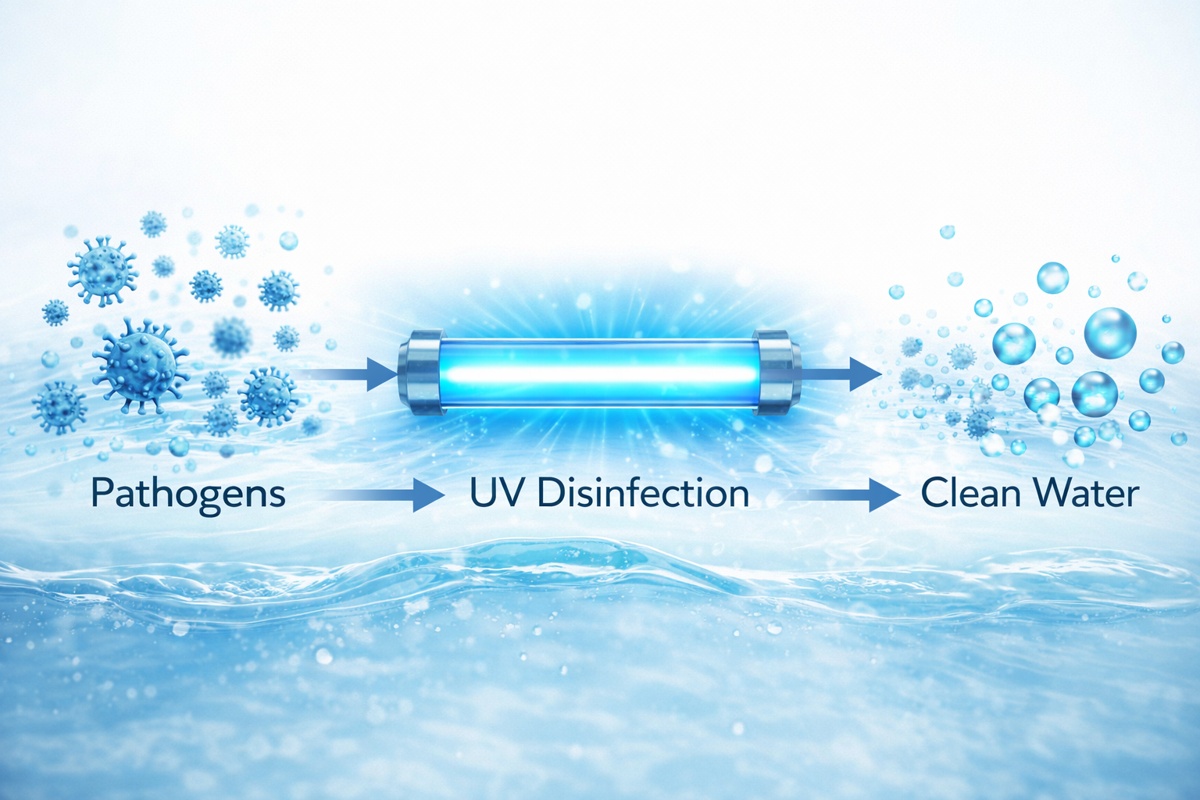
UV disinfection uses ultraviolet light at a wavelength of 254 nm to permanently inactivate bacteria, viruses, and other microorganisms in water. The UV-C radiation penetrates the cell walls of pathogens and disrupts their DNA, preventing them from reproducing and rendering them harmless.
Unlike chemical disinfection methods, UV treatment adds nothing to the water — no chlorine, no byproducts, no residual taste or odor. The treatment is instantaneous as water flows through the UV reactor, making it one of the safest and most efficient disinfection methods available.
How it Works

Step 1
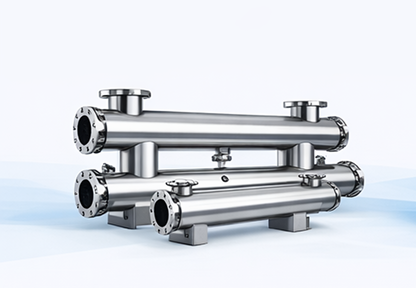
Water enters the stainless steel UV reactor chamber through the inlet connection.

Step 2
Inside the reactor, water flows around a quartz sleeve that houses the UV lamp. The quartz sleeve protects the lamp while allowing maximum UV-C light transmission.

Step 3
The UV-C light at 254 nm wavelength penetrates microorganism cell walls and destroys their DNA structure, making them unable to reproduce or cause infection.

Step 4
Treated water exits the reactor fully disinfected, with no chemical addition, no change in water chemistry, and no harmful byproducts.
KEY ADVANTAGES
Advantage |
Description |
|---|---|
|
Chemical-Free Treatment |
No chlorine or chemical additives required — eliminates concerns about disinfection byproducts and chemical handling. |
|
Instant Disinfection |
Pathogens are inactivated on contact as water passes through the reactor. No holding tanks or contact time needed. |
|
No Byproducts |
UV treatment produces zero harmful byproducts. The water’s taste, odor, and pH remain unchanged. |
|
Low Operating Cost |
UV lamps consume minimal energy and have operational lifespans of 9,000 to 16,000 hours, keeping maintenance costs low. |
|
Broad Spectrum Effectiveness |
Effective against bacteria, viruses, protozoa, and other waterborne pathogens including chlorine-resistant organisms. |
|
Compact & Easy to Install |
Inline reactor design integrates easily into existing pipework with minimal space requirements. |
|
Environmentally Safe |
No chemical storage, transport, or disposal concerns. Fully compliant with environmental regulations. |
UV System Types

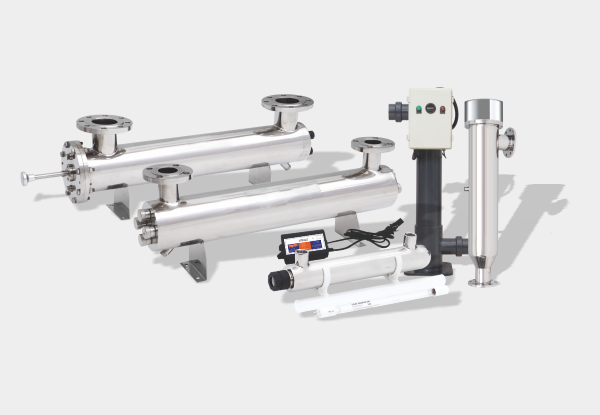
Low Pressure UV – Variant 1
Low pressure UV systems emit monochromatic light at 254 nm, the peak germicidal wavelength. They offer high electrical efficiency and long lamp life of up to 16,000 hours, making them ideal for standard disinfection applications across a wide range of flow rates from 0.23 to 1,000 m³/h.

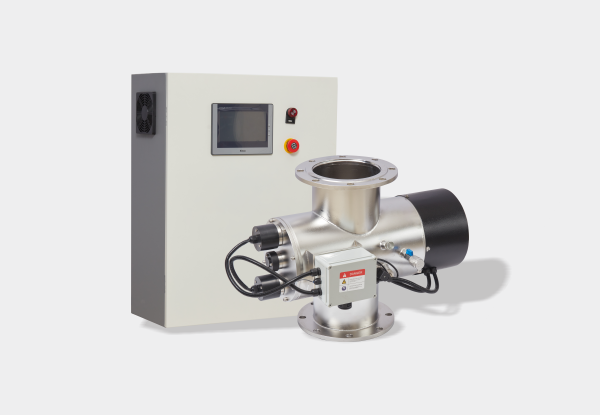
Medium Pressure UV – Variant 2
Medium pressure UV systems produce polychromatic (broad spectrum) light with significantly higher UV intensity per lamp. This makes them effective for chloramine reduction and applications requiring high UV doses in compact reactor designs. Flow rates range from 10 to 500 m³/h with lamp life of 5,000 to 7,500 hours.

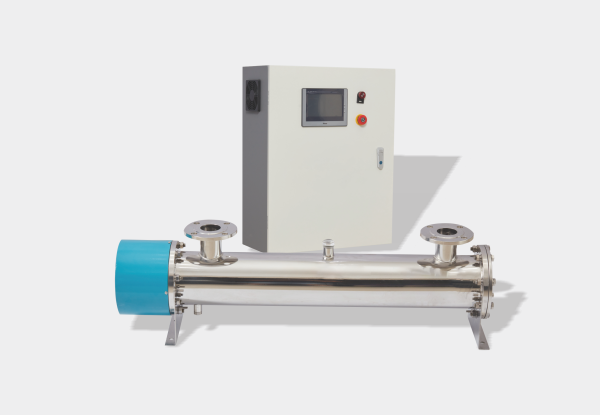
TOC Reduction UV – Variant 3
Specialized UV reactors designed for total organic carbon (TOC) reduction in ultrapure water applications. Built with pharmaceutical-grade SS316L stainless steel and surface finishes of RA ≤ 0.20 μm, these systems meet the stringent requirements of semiconductor, pharmaceutical, and laboratory water production.
Application
Related Product
UV Sterilizers – Low Pressure
F, K, L, S, SQ, AC, KD, HDPE, PVC series
UV Sterilizers – Medium Pressure
TOC Reduction Systems
T-Series
Spare Parts
UV lamps, quartz sleeves, ballasts, UV intensity sensors
Need UV Disinfection for Your Project?
Our team can help you select the right UV system based on your flow rate, water quality, and application requirements.